

1. The Evolution of Tape Edging Mechanics
Stitch Selection CriteriaLegacy tape edge operations relied heavily on manual handling and static sewing speeds, creating severe bottlenecks during the final assembly phase of bed manufacturing. Modern plant managers must evaluate how stitch formation dynamics impact daily shift quotas, edge aesthetic consistency, and the overall capital expenditure payback period.
Engineering Analysis: Stitch Physics
- Core Principle: Chain stitching utilizes a single thread loop intertwined via a looper mechanism, whereas lock stitching interlocks top and bobbin threads to secure the seam.
- Technical Solution: Upgrading to advanced automated mattress tape edge solutions allows manufacturers to instantly switch or optimize head types based on specific pillow-top or tight-top model requirements.
2. Chain Stitch Dynamics and High-Speed Output
Speed & ThroughputChain stitch configurations are the industry standard for high-volume mattress lines due to the elimination of bobbin changes. Understanding the operational parameters of high-speed loopers ensures plants maintain continuous sewing cycles without unexpected downtime.
Operational Parameter: Bobbin Elimination
- Production Insight: Removing bobbin winding and replacement steps saves up to 15 percent of active shift time on high-output taping stations.
- Technical Solution: Servo-driven sewing heads maintain constant needle penetration force even when running chain stitches at maximum rotational speeds exceeding 2,500 RPM.
3. Lock Stitch Structural Integrity for Heavy Panels
Seam SecurityWhile chain stitches excel in speed, lock stitches provide superior seam security and flat-lying aesthetics prized in luxury hospitality mattress constructions. Selecting the appropriate sewing head prevents unraveling risks and guarantees compliance with rigorous international durability standards.
Material Property: Interlocking Tension
- Seam Stability: Lock stitch mechanisms secure each individual loop independently, preventing total seam failure if a single thread segment is snagged.
- Technical Solution: Precision tensioners integrated into modern mattress machinery prevent puckering on high-loft multi-needle quilted panels.
4. Production Throughput and Cycle Time Analysis
Cycle OptimizationEvaluating beds-per-shift output requires a strict examination of handling overhead versus sewing velocity. Automated corner deceleration and pneumatic flipping mechanisms redefine how quickly operators can finish a four-sided mattress perimeter.
Process Metric: Corner Deceleration
- Bottleneck Factor: Manual corner rounding and flipping cause severe inertial fatigue and inconsistent stitching radii across shifts.
- Technical Solution: Programmable logic controllers automatically slow down sewing velocity precisely at corner approach vectors, eliminating fabric bunching and thread snaps.
Essential Machinery for Scaling Production
High-Performance Tape Edge Systems for Modern Plants
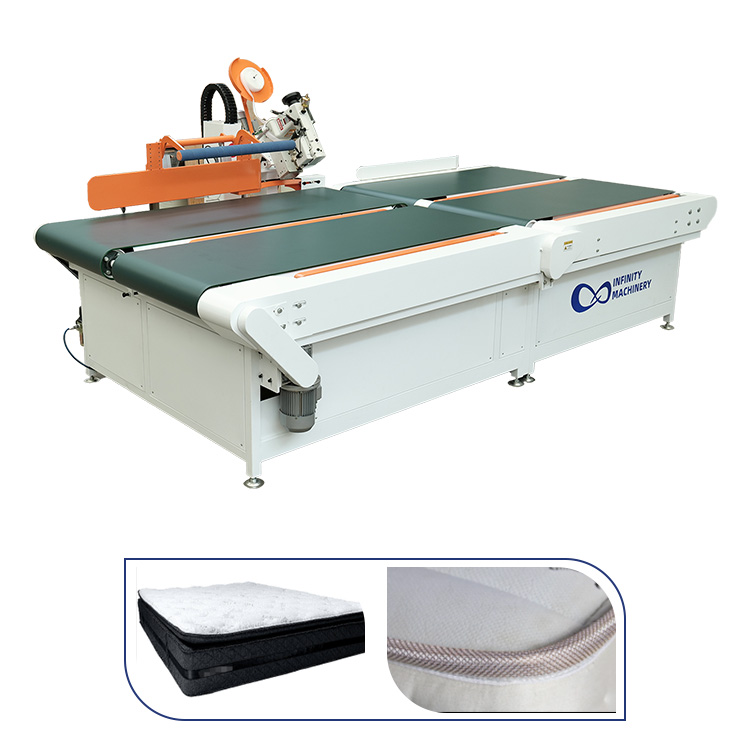
Features automatic rotation, pneumatic flipping, and robotic arm assistance to eliminate manual handling fatigue and maximize shift output.

Engineered with a high-speed moving sewing head and automatic lifting workbench, providing versatile chain or lock stitch operation.
5. Operator Ergonomics and Labor Dependency
Labor EfficiencyThe shortage of skilled veteran sewing technicians makes machine automation a critical survival strategy for factory owners. Transitioning from traditional manual tables to automated tape edge units slashes training periods and mitigates physical injury claims.
Operational Parameter: Robotic Assistance
- Labor Impact: Fully automated mattress turning and conveying systems reduce required workstation headcount from two operators to a single supervisor.
- Technical Solution: Integrated optical sensors and pneumatic clamps hold heavy hybrid mattresses securely during high-speed sewing sequences.
6. Maintenance Realities and Scrap Reduction
Maintenance & UptimeDowntime caused by frequent thread breakage and complex mechanical jams directly erodes factory profit margins. Preventive maintenance protocols and robust lubricating systems keep production lines running at peak OEE.
Diagnostic Factor: Lubrication & Tension
- Wear Prevention: Automatic oil supply systems on high-speed sewing heads prevent overheating and needle seizure during continuous multi-shift operation.
- Technical Solution: Electronic thread-break detectors instantly halt the cycle before skipped stitches compromise the entire mattress panel.
7. Total Cost of Ownership (TCO) and ROI Analysis
Financial InvestmentEvaluating equipment upgrades requires looking beyond initial capital outlay to calculate long-term operational savings, reduced fabric scrap, and labor reallocation benefits. Modernizing your finishing line delivers measurable returns within months of commissioning.
Financial Metric: Cost-Per-Bed
- ROI Calculation: Higher hourly throughput combined with zero-defect automated sewing reduces direct manufacturing labor costs per mattress by up to 35 percent.
- Technical Solution: Heavy-duty fabricated steel frames and direct-drive servo motors ensure a multi-year service life with minimal component replacement costs.
Strategic Plant Investment Takeaway
Upgrading from legacy manual equipment to advanced automated tape edge machinery equipped with optimal chain or lock stitch configurations is the definitive strategy for reducing cost-per-bed, maximizing output per shift, and securing long-term factory profitability in a competitive global market.
Ready to Upgrade Your Mattress Production Line?
Consult with our manufacturing engineers to configure the ideal tape edge machinery for your factory floor.


