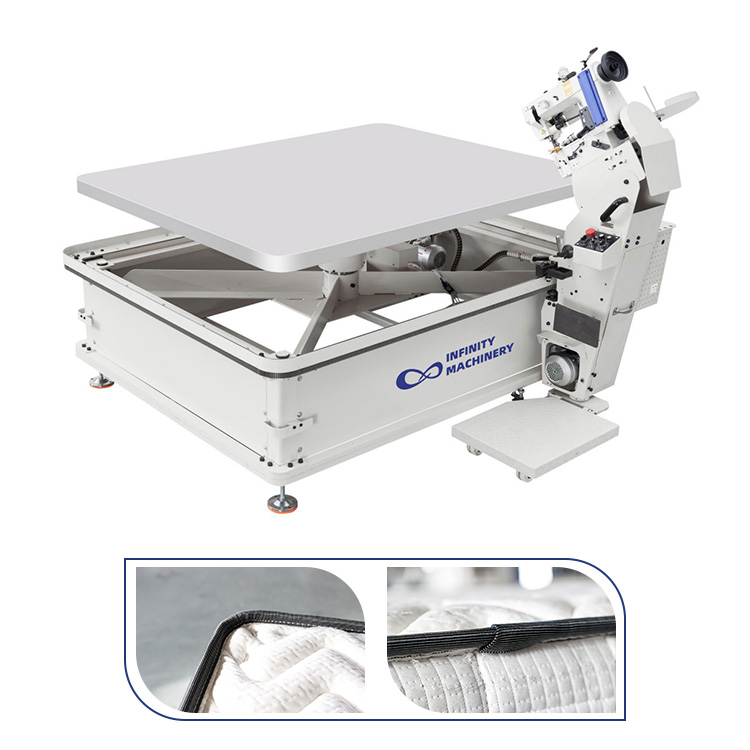
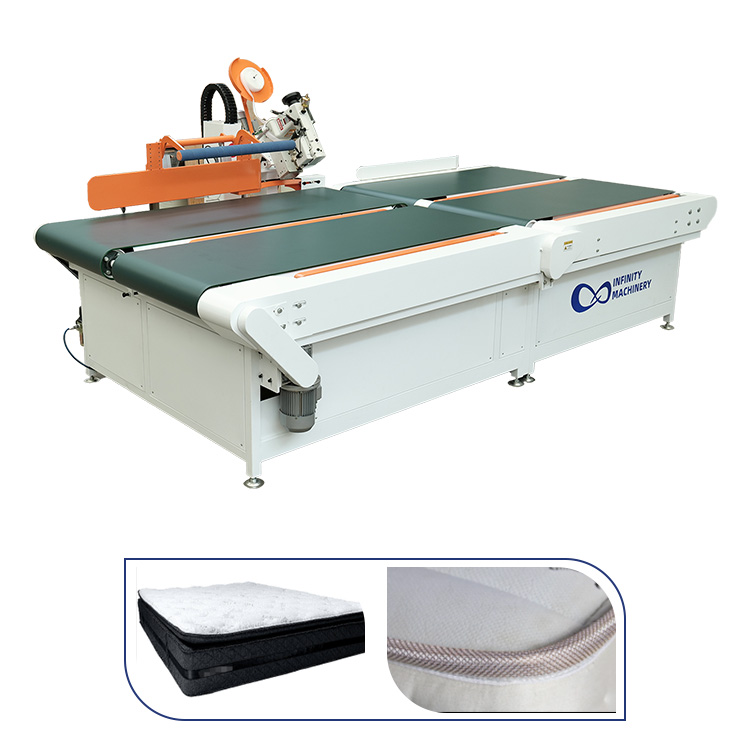
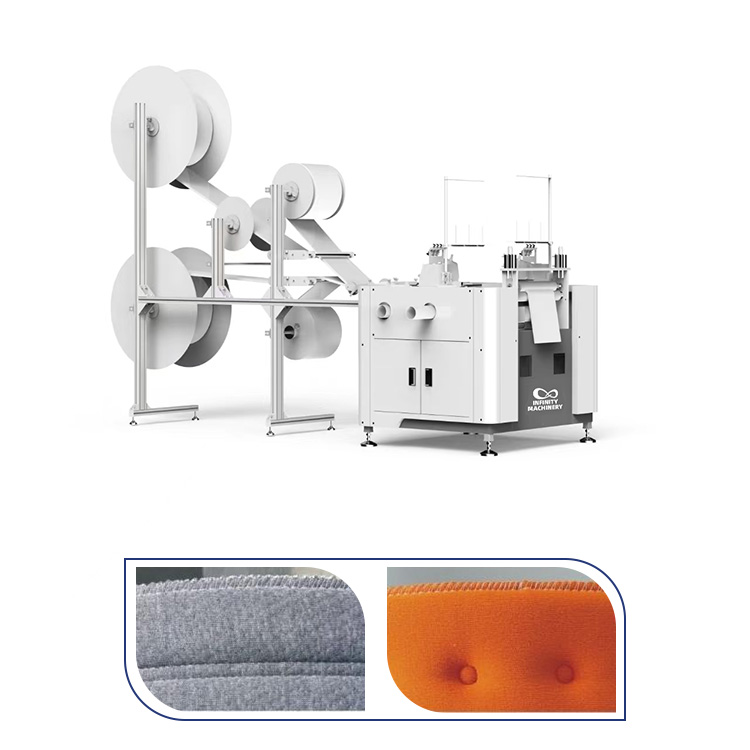
The IF-T3T Automatic Tape Edge Machine uses chain stitch technology to sew the decorative tape strip around the mattress perimeter. Unlike lock stitch machines that use two threads, chain stitch uses a single thread that forms a continuous loop, creating a seam that is more elastic and resistant to unraveling — ideal for mattresses that undergo compression and rolling during packing.
This guide covers the IF-T3T's chain stitch technology, specifications, production speed, and how it compares to the lock stitch IF-T4. Whether you produce traditional tape edge mattresses or bed-in-a-box models that require high seam elasticity, the IF-T3T is a proven workhorse.
We also cover the chain stitch mechanism itself — how it works, its advantages over lock stitch, and the specific maintenance it requires.
Chain stitch is fundamentally different from lock stitch. A lock stitch uses a needle thread and a bobbin thread that interlock at each stitch, creating a tight, non-elastic seam. A chain stitch uses a single thread that forms a continuous chain of loops on the underside of the fabric. Each loop is pulled through the previous loop, creating a seam that can stretch and flex without breaking.
The chain stitch mechanism consists of a needle that carries the thread through the fabric and a looper that catches the thread on the underside and forms the chain loop. The looper moves in precise synchronization with the needle, ensuring each loop is consistent in size and tension.
Key advantage for mattress tape edge: When a mattress is compressed and rolled for packing, the tape edge seam is subjected to significant stress. A chain stitch seam can stretch up to 30% without breaking, while a lock stitch seam typically breaks at 10-15% stretch. For bed-in-a-box manufacturers, this makes the IF-T3T the preferred choice.
| Specification | Value |
|---|---|
| Stitch type | Chain stitch (single thread) |
| Speed | Up to 1,000 stitches per minute |
| Stitch length | 4-10mm (adjustable) |
| Mattress size range | Twin to King |
| Output | 500-700 mattresses per shift |
| Cycle time | 45-90 seconds (size dependent) |
| Operators | 1 |
| Factor | IF-T3T Chain Stitch | IF-T4 Lock Stitch |
|---|---|---|
| Thread system | Single thread | Two threads (needle + bobbin) |
| Seam elasticity | High (up to 30% stretch) | Low (10-15% stretch) |
| Seam strength | Excellent (continuous loop) | Good (interlocked) |
| Unravel resistance | Good (requires lock stitch at end) | Excellent |
| Best for | Bed-in-a-box, compressed mattresses | Traditional retail mattresses |
| Maintenance | Looper timing critical | Bobbin hook timing |
The decision between chain stitch (IF-T3T) and lock stitch (IF-T4) depends on your mattress type and target market. If you produce bed-in-a-box mattresses that are compressed, rolled, and shipped in a box, the IF-T3T's chain stitch is the better choice — the seam elasticity prevents stitch breakage during compression. If you produce traditional mattresses for retail showrooms where the tape edge seam is a visible quality indicator, the IF-T4's lock stitch provides a cleaner appearance and better unravel resistance at the seam ends.
| Mattress Size | Cycle Time | Approx. Output/Shift |
|---|---|---|
| Twin (90x190cm) | 45-55 sec | 550-650 |
| Full/Double | 55-65 sec | 500-580 |
| Queen | 60-75 sec | 450-530 |
| King | 75-90 sec | 380-460 |
Training an operator on the IF-T3T takes 3-5 days. The chain stitch mechanism is slightly more complex than lock stitch, but the PLC-controlled operation makes day-to-day use straightforward. Operators learn to load the mattress, start the cycle, monitor stitch quality, and handle the automatic tape cutting. The IF-T3T's touch-screen interface stores all machine settings, so operators simply select the mattress model and start sewing — no manual adjustments needed between size changes.
Chain stitch machines require specific maintenance attention to the looper mechanism. The looper is the component that forms the chain loops on the underside of the fabric. Proper looper timing — the precise synchronization between the needle and looper — is critical for consistent stitch formation. Recommended maintenance includes looper timing checks every 40 hours of operation, daily cleaning of the looper area to prevent thread buildup, and weekly lubrication of the looper drive mechanism.
These three machines form a complete mattress finishing line — from panel sewing to tape edge to packing.
Our tape edge specialists can help you choose between the IF-T3T chain stitch and IF-T4 lock stitch based on your mattress type and production requirements.